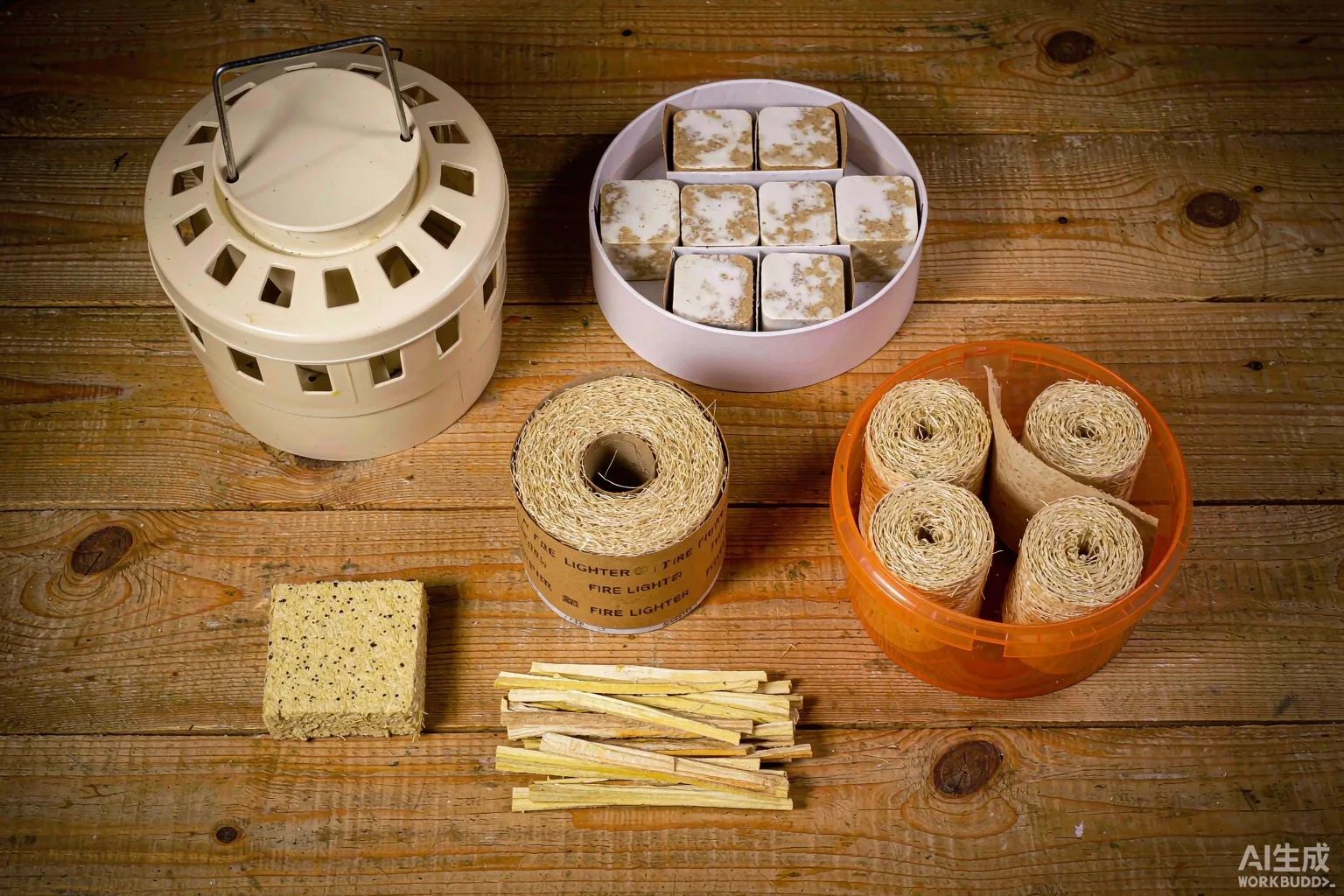
Typical Production Process of Wood Wool / Wax Fire Starter Rolls
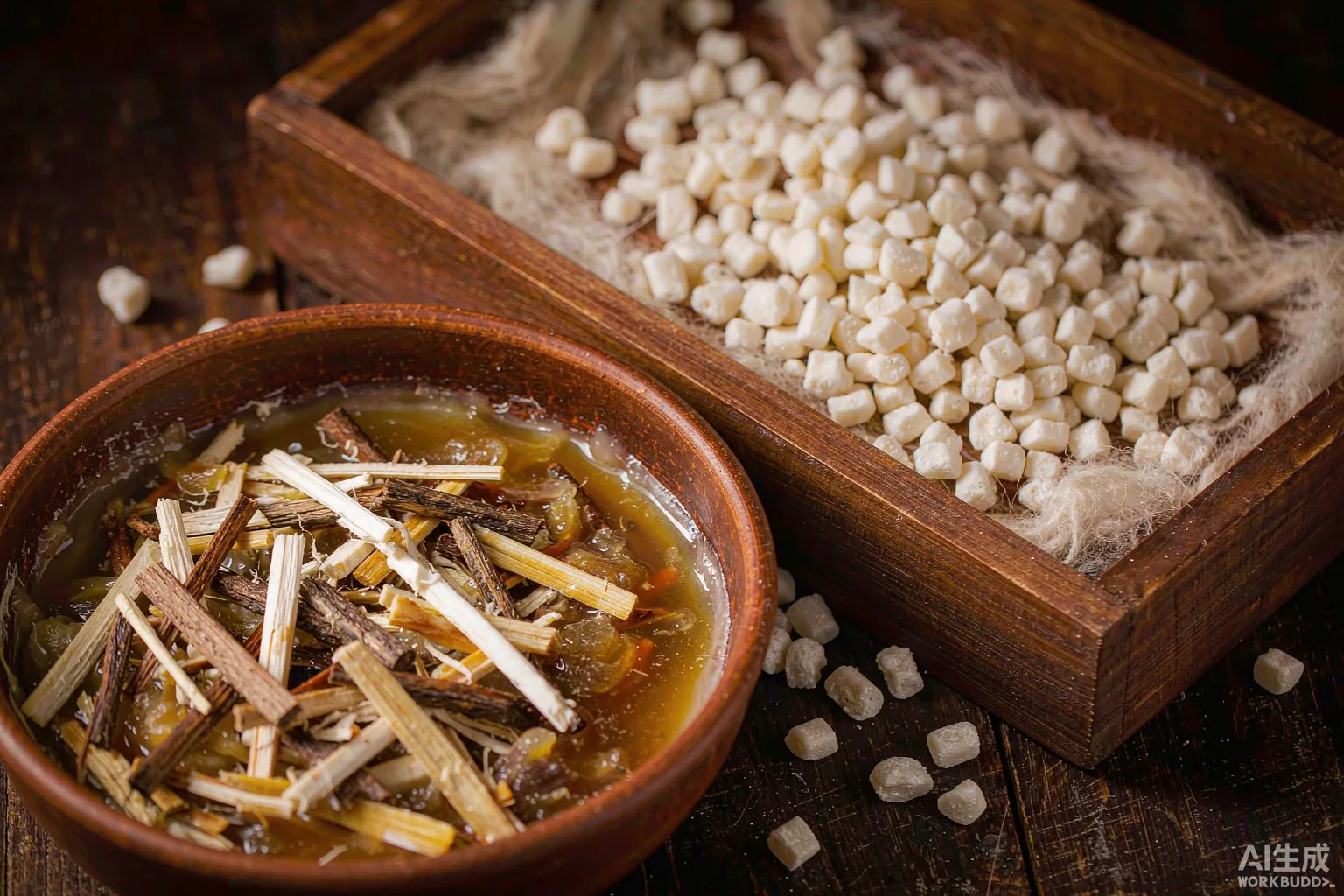
① Chipping & curling: Raw logs (pine/spruce are best, containing natural resin and wax) are cut into thin chips by multi-blade chippers, then high-temperature dried so they curl into characteristic wood wool. ② Wax & resin impregnation: Industrially, a "tumbling" method drops the wool from a height into a wax/resin bath for even coating — the key is controlling thickness so gaps between fibers remain to sustain burning. ③ Forming & curing: The waxed fibers are rolled into small bundles; higher density means a smaller flame but longer burn, then re-dried and cured, cooled to prevent melting, sampled and packed.
Two Product Families Compared
| Dimension | Natural Type (Fatwood/Firewood) | Manufactured Fiber Type (Wood Wool + Wax) |
|---|---|---|
| Raw material source | Directly taken from resin-rich pine heartwood | Wood-processing by-products + wax binder |
| Burn time | Fatwood 5–10 min | Wood wool 8–12 / wax rolls 8–15 min |
| Moisture resistance | Resin is naturally waterproof | Paraffin repels water, still burns when damp |
| Odor | Pine resin scent | Paraffin has odor; beeswax/soy are odorless and smokeless |
| Channel positioning | Outdoor retail / survival / camping | B2B volume mainstay |
Scenario Matching Quick Reference
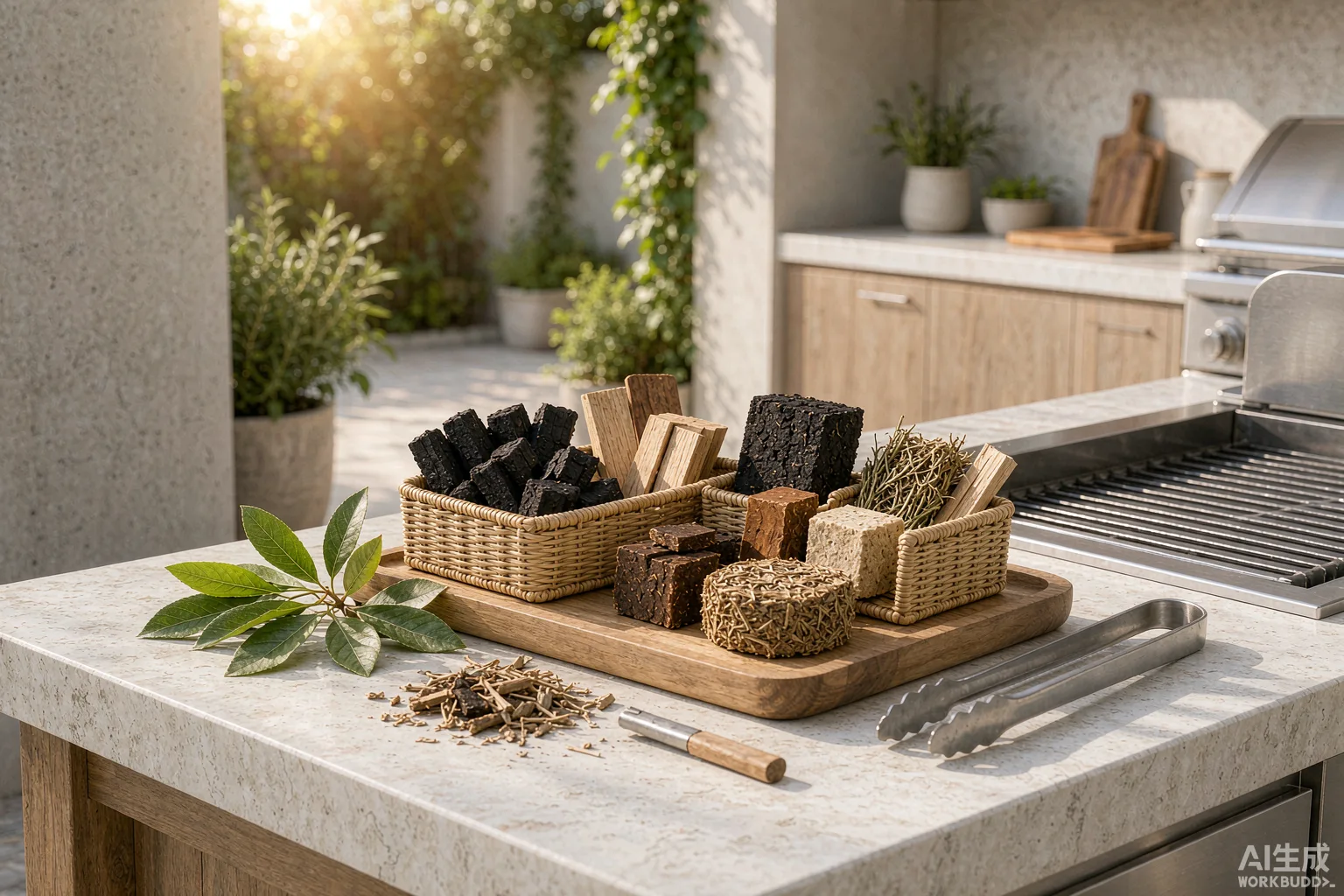
Indoor fireplace/wood stove → wood wool, wax-fiber rolls (odorless, clean, long burn); charcoal grill → food-grade natural fire starters + chimney starter (8–10 min stable flame); camping campfire → wax rolls, Fatwood sticks (moisture- and wind-resistant); fire pit patio → paraffin fiber cubes (economical, wind-resistant); bushcraft survival → Fatwood, feather sticks, tinder cloth (catches sparks).